What is cupping (hijama)?
Cupping (hijama) is the best remedy recommended and used by the Messenger (Sallallaahu Álayhi Wasallam). The Messenger (Sallallaahu Álayhi Wasallam) said,"Indeed the best of remedies you have is cupping (hijama)…" [Saheeh al-Bukhaaree (5371)]. He (Sallallaahu Álayhi Wasallam) also said that on the night of Israa (his ascension to the heavens) he (Sallallaahu Álayhi Wasallam) did not pass by an angel except that it said to him, "Oh Muhammad, order your Ummah (nation) with cupping (hijama)." [Saheeh Sunan Tirmidhee (3479)]. This shows the importance and greatness of this Sunnah.
'Hijama' in arabic is derived from 'hajm' which means 'sucking'. Cupping (hijama) is the process of applying cups to various points on the body by removing the air inside the cups to form a vacuum.
Cupping (hijama) is of three types:
- Dry cupping (hijama) - This is the process of using a vacuum on different areas of the body in order to gather the blood in that area without incisions (small, light scratches using a razor).
- Dry massage cupping (hijama) – This is similar to dry cupping (hijama) but olive oil is applied to the skin (before applying the cups) in order to allow easy movement of the cups.
70% of diseases, pains and ailments are due to the blood being unable to reach certain parts of the body. Dry cupping (hijama) and dry massaging cupping (hijama) allow the blood to reach these places.
Dry and massage cupping (hijama) may be self-administered in the comfort and privacy of your own home. Each cupping (hijama) box is accompanied by an instruction booklet. We have also provided further instructions on our 'How To Cup' page.
Dry and massage cupping (hijama) may be administered any time of the day, any day of the week or month. There are no restrictions.
- Wet cupping (hijama) - This is the process of using a vacuum at different points on the body but with incisions in order to remove 'harmful' blood which lies just beneath the surface of the skin. (It is recommended that wet cupping (hijama) is only administered by a cupping therapist).
We will run cupping (hijama) courses for wet cupping (hijama) inshAllah. Please join our FREE newsletter and we will keep you updated inshAllah.
Wet cupping (hijama) may only be administered at certain times of the day and days of the week. Please see our 'Authentic Narrations' page for further details.
Is cupping (hijama) a cure for every disease?
Cupping therapy is a form of alternative medicine in which cups are placed on the skin to create suction. The cups can be made of a variety of materials, including:
- Glass
- Bamboo
- Earthenware
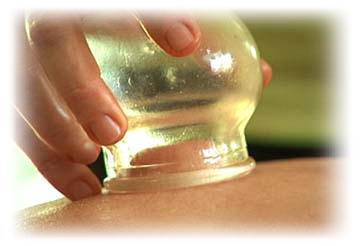
Supporters of cupping therapy
believe the suction of the cups mobilizes blood flow to
promote the healing of a broad range of medical ailments.
Cupping therapy dates back to ancient Egyptian, Chinese, and Middle Eastern
cultures. One of the oldest medical textbooks in the world, the Ebers
Papyrus, describes how the ancient Egyptians were using cupping therapy in
1,550 B.C.
In general, Western medical societies are skeptical of the health claims made by cupping therapy supporters. "Available scientific evidence does not support cupping as a cure for cancer or any other disease," states the American Cancer Society. "Reports of successful treatment with cupping are mainly anecdotal rather than from research studies."
But a 2012 study published in the journal PLoS ONE suggests that cupping therapy may have more than a placebo effect. Australian and Chinese researchers reviewed 135 studies on cupping therapy published between 1992 and 2010. They concluded that cupping therapy may be effective when combined with other treatments like acupuncture or medications in treating various diseases and conditions, such as:
A more modern version of cupping uses a rubber pump to create the vacuum inside the cup. Sometimes practitioners use medical-grade silicone cups. These are pliable enough to be moved from place to place on the skin and produce a massage-like effect.
During wet cupping, a mild suction is created using a cup that is left in place for about three minutes. The practitioner then removes the cup and uses a small scalpel to make superficial skin incisions. Then he or she performs a second suction to draw out a small quantity of blood.
After the procedure, the site may be covered with an antibiotic ointment and bandage to prevent infection. The skin's appearance generally returns to normal within 10 days.
Cupping therapy supporters believe that wet cupping removes harmful substances and toxins from the body to promote healing.
In general, Western medical societies are skeptical of the health claims made by cupping therapy supporters. "Available scientific evidence does not support cupping as a cure for cancer or any other disease," states the American Cancer Society. "Reports of successful treatment with cupping are mainly anecdotal rather than from research studies."
But a 2012 study published in the journal PLoS ONE suggests that cupping therapy may have more than a placebo effect. Australian and Chinese researchers reviewed 135 studies on cupping therapy published between 1992 and 2010. They concluded that cupping therapy may be effective when combined with other treatments like acupuncture or medications in treating various diseases and conditions, such as:
- Herpes zoster
- Acne
- Facial paralysis
- Cervical spondylosis
During the types of cupping, a flammable substance such as alcohol, herbs, or paper is placed in a cup and set on fire. As the fire goes out, the cup is placed upside down on the patient's skin.
As the air inside the cup cools, it creates a vacuum. This causes the skin to rise and redden as blood vessels expand. The cup is generally left in place for five to 10 minutes.A more modern version of cupping uses a rubber pump to create the vacuum inside the cup. Sometimes practitioners use medical-grade silicone cups. These are pliable enough to be moved from place to place on the skin and produce a massage-like effect.
During wet cupping, a mild suction is created using a cup that is left in place for about three minutes. The practitioner then removes the cup and uses a small scalpel to make superficial skin incisions. Then he or she performs a second suction to draw out a small quantity of blood.
After the procedure, the site may be covered with an antibiotic ointment and bandage to prevent infection. The skin's appearance generally returns to normal within 10 days.
Cupping therapy supporters believe that wet cupping removes harmful substances and toxins from the body to promote healing.
The British Cupping Society says cupping therapy can treat a variety of
conditions. This has not been backed up by studies. But the organization says
cupping therapy is used to treat:
Like many alternative treatments, cupping therapy has not been extensively studied. Researchers say that most cupping therapy studies have been small and poorly designed. More studies are needed to prove or disprove claims of health benefits.
SOURCES:
British Cupping Society: "A Brief Overview of Cupping Therapy," "Al-Hijamah Cupping Therapy."
American Cancer Society: "Cupping."
Cao, J. PLoS ONE, February 2012; vol 7: pp 1-14.
- Blood disorders such as anemia and hemophilia.
- Rheumatic diseases such as arthritis and fibromyalgia.
- Fertility and gynecological disorders.
- Skin problems such as eczema and acne.
- High blood pressure (hypertension).
- Migraine.
- Anxiety and depression.
- Bronchial congestion caused by allergies and asthma.
- Varicose veins.
Areas of Cupping
Anas ibn Maalik (may Allaah be pleased with him) reported that the Messenger (Sallallaahu Álayhi Wasallam) was treated with cupping three times on the two veins at the side of the neck and the base of the neck. [Saheeh Sunan Abi Dawud (3860), Ibn Maajah (3483)].
Abdullah ibn Abbas (may Allaah be pleased with him) reported that the Messenger (Sallallaahu Álayhi Wasallam) was cupped on his head. [Saheeh al-Bukhaaree (5699)].
Abdullah ibn 'Umar (may Allaah be pleased with him) reported that the Messenger (Sallallaahu Álayhi Wasallam) used to cup his head and would call it (the place at the top of the head) "Umm Mugheeth." [Saheehah (753), Saheeh al-Jaami' (4804)].
Jaabir ibn Abdullah (may Allaah be pleased with him) reported that the Messenger (Sallallaahu Álayhi Wasallam) was treated with cupping on his hip for a pain in that area. [Saheeh Sunan Abi Dawud (3863)].
Anas ibn Maalik (may Allaah be pleased with him) reported that the Messenger (Sallallaahu Álayhi Wasallam) was treated with cupping three times on the two veins at the side of the neck and the base of the neck. [Saheeh Sunan Abi Dawud (3860), Ibn Maajah (3483)].
Abdullah ibn Abbas (may Allaah be pleased with him) reported that the Messenger (Sallallaahu Álayhi Wasallam) was cupped on his head. [Saheeh al-Bukhaaree (5699)].
Abdullah ibn 'Umar (may Allaah be pleased with him) reported that the Messenger (Sallallaahu Álayhi Wasallam) used to cup his head and would call it (the place at the top of the head) "Umm Mugheeth." [Saheehah (753), Saheeh al-Jaami' (4804)].
Jaabir ibn Abdullah (may Allaah be pleased with him) reported that the Messenger (Sallallaahu Álayhi Wasallam) was treated with cupping on his hip for a pain in that area. [Saheeh Sunan Abi Dawud (3863)].
Anas ibn Maalik (may Allaah be pleased with him) reported that the Messenger (Sallallaahu Álayhi Wasallam) was treated with cupping when he was in Ihram, on thetop of his foot, for a pain in that area. [Saheeh Sunan Abi Dawud (1836)].
Ibn al-Qayyim (may Allaah have mercy on him) said, "Cupping under the chin is beneficial for pain in the teeth, face and throat, if it is done in its proper time. It purifies the head and the jaws.
Cupping on the top of the foot is a substitution for the puncturing of the Saphena, which is a large vein in the heel. It is beneficial for treating ulcers that occur on the thighs and calves, the interruption of menses and skin irritation on the testicles.
Cupping at the bottom of the chest is beneficial for the treatment of sores, scabies and mange on the thighs. It helps against gout, hemorrhoids, elephantiasis and itchiness on the back." [Zaad al-Ma'aad, 4/58].
Ibn al-Qayyim (may Allaah have mercy on him) said, "Cupping under the chin is beneficial for pain in the teeth, face and throat, if it is done in its proper time. It purifies the head and the jaws.
Cupping on the top of the foot is a substitution for the puncturing of the Saphena, which is a large vein in the heel. It is beneficial for treating ulcers that occur on the thighs and calves, the interruption of menses and skin irritation on the testicles.
Cupping at the bottom of the chest is beneficial for the treatment of sores, scabies and mange on the thighs. It helps against gout, hemorrhoids, elephantiasis and itchiness on the back." [Zaad al-Ma'aad, 4/58].
Cupping For Women
Jaabir ibn Abdullah (may Allaah be pleased with him) reported Umm Salama (may Allah be pleased with her) asked permission from the Messenger (Sallallaahu Álayhi Wasallam) to do cupping. So the Messenger (Sallallaahu Álayhi Wasallam) ordered Abu Teeba (may Allaah be pleased with him) to cup her. Jaabir ibn Abdullah (may Allaah be pleased with him) said, " I think he (Sallallaahu Álayhi Wasallam) said that Abu Teeba (may Allaah be pleased with him) is her brother through breastfeeding or a young boy who didn't reach puberty". [Saheeh Muslim (5708), Abu Dawud (4102), Saheeh ibn Maajah (3480)].
Side Effects of Cupping Therapy
Cupping is considered to be relatively safe, especially when performed by trained health professionals. Potential side effects include:- Mild discomfort
- Burns
- Bruises
- Skin infection
- Pregnant or menstruating women.
- People with metastatic cancer (cancer that has spread from one part of the body to another).
- People with bone fractures or muscle spasms.
- A deep vein thrombosis
- An ulcer
- An artery
- A pulse that can be felt
Like many alternative treatments, cupping therapy has not been extensively studied. Researchers say that most cupping therapy studies have been small and poorly designed. More studies are needed to prove or disprove claims of health benefits.
Is cupping (hijama) a cure for every disease?
Cupping (hijama) is a cure for every disease if performed in its correct time. The Messenger (Sallallaahu Álayhi Wasallam) said, "Indeed in cupping (hijama) there is a cure." [Saheeh Muslim (5706)]. The Messenger (Sallallaahu Álayhi Wasallam) said, "Whoever performs cupping (hijama) on the 17th, 19th or 21st day (of the Islamic month) then it is a cure for every disease." [Saheeh Sunan Abi Dawud (3861)].
There are specific points on the body where the cups are applied for each ailment.
Is cupping (hijama) from the Sunnah?
Above are just some of the authentic narrations which show that cupping (hijama) is from the Sunnah of the Messenger (Sallallaahu Álayhi Wasallam). Please see our 'Authentic Narrations' page for more authentic narrations about cupping (hijama).
The Messenger (Sallallaahu Álayhi Wasallam) said, "Whoever revives a Sunnah from my Sunnah and the people practise it, s/he will have the same reward of those who practise it without their reward diminishing…" [Sunan ibn Maajah (209)].
The Best Days For Cupping
The 17th, 19th and 21st of the Islamic month which coincides with Monday, Tuesday or Thursday. Anas ibn Maalik (may Allaah be pleased with him) reported that the Messenger (Sallallaahu Álayhi Wasallam) said, "Whoever wants to perform cupping then let him look for 17th, 19th and 21st…" [Saheeh Sunan Ibn Majah (3486)].
The 17th, 19th and 21st of the Islamic month which coincides with Monday, Tuesday or Thursday. Anas ibn Maalik (may Allaah be pleased with him) reported that the Messenger (Sallallaahu Álayhi Wasallam) said, "Whoever wants to perform cupping then let him look for 17th, 19th and 21st…" [Saheeh Sunan Ibn Majah (3486)].
As for the Islamic day and night, the night enters before the day. So at sunset on Tuesday, Wednesday night comes in. Cupping is best performed during the day time between sunrise and sunset. If one is not able to be cupped on 17th, 19th or 21st (coinciding with Monday, Tuesday or Thursday) then any Monday, Tuesday or Thursday of the month.
Cupping While fasting Or In The State Of Ihram
Abdullah ibn Abbas (may Allaah be pleased with him) reported that the Messenger (Sallallaahu Álayhi Wasallam) was cupped on his head for a unilateral headache while he was in Ihraam. [Saheeh al-Bukhaaree (5701)].
Abdullah ibn Abbas (may Allaah be pleased with him) reported that the Messenger (Sallallaahu Álayhi Wasallam) was cupped on his head for a unilateral headache while he was in Ihraam. [Saheeh al-Bukhaaree (5701)].
Abdullah ibn Abbas (may Allaah be pleased with him) reported that the Messenger (Sallallaahu Álayhi Wasallam) was cupped while he was fasting. [Saheeh al-Bukhaaree (5694)].
SOURCES:
British Cupping Society: "A Brief Overview of Cupping Therapy," "Al-Hijamah Cupping Therapy."
American Cancer Society: "Cupping."
Cao, J. PLoS ONE, February 2012; vol 7: pp 1-14.
You have really described Hijama cupping therapy ins and out with the explanation how it cures
ReplyDeletealmost all diseases by means of Islamic Sunnah. You have also clarifies whether the therapy Hijama is the cure for every diseases .
HPMI offers professional Hijama Training Course in London under supervision of qualified and experienced trainers of Hijama Therapy Training Courses in United Kingdom.
ReplyDeleteGreat post.
ReplyDeletehttp://forum.webd.pl/profile.php?mode=viewprofile&u=431911
Great post.
ReplyDeletehttps://trello.com/7dimensionsmedicalcentre/activity
Great post.
ReplyDeletehttps://www.yoys.ae/profil,35027,7-dimensions-medical-centre,dubai.html
It's Very informative blogpost. Thanks for sharing.
ReplyDeletephysiotherapy near me
cupping therapy
it's awesome benefits of hijama therapy. Thanks for sharing
ReplyDeletePhysiotherapy near me
Cupping Therapy
Physiotherapy Clinic
Great post.
ReplyDeletehttps://www.multichain.com/qa/user/KennyMartin
Great post.
ReplyDeletehttps://www.planetcalypsoforum.com/forum/index.php?members/robertbaize.68529/#about
Hi,
ReplyDeleteI have read your blog and found it very useful. Thanks for sharing such informative posts. Looking forward to more such blogs
Regards,
acupuncture and cupping therapy near me
It's Very informative blogpost. Thanks for sharing.
ReplyDeleteVisit now for detailed information
The Sidr Honey Price in Pakistan in Pakistan can vary depending on the brand, quality, and region. On average, high-quality Sidr honey can range from PKR 2,500 to PKR 7,000 per kilogram. Premium brands like Marhaba, WBM, and Organic Valley often offer Sidr honey at higher prices due to its purity and rich nutritional benefits. Prices may also vary based on whether the honey is sourced from local or imported Sidr trees, with imported varieties generally costing more.
ReplyDeleteoriginal shilajit in pakistan is highly sought after for its numerous health benefits, including boosting energy, improving mental clarity, and enhancing overall vitality. It is a natural substance found in the mountainous regions, particularly the Himalayas, and is known for its rich mineral content. However, due to its increasing popularity, the market is flooded with fake or adulterated products. To ensure you're purchasing genuine Shilajit in Pakistan, it's crucial to buy from reputable suppliers or well-known health stores. Authentic Shilajit is typically dark brown or black, sticky, and has a strong, earthy aroma. Always check for certification and reviews before purchasing.
ReplyDelete